











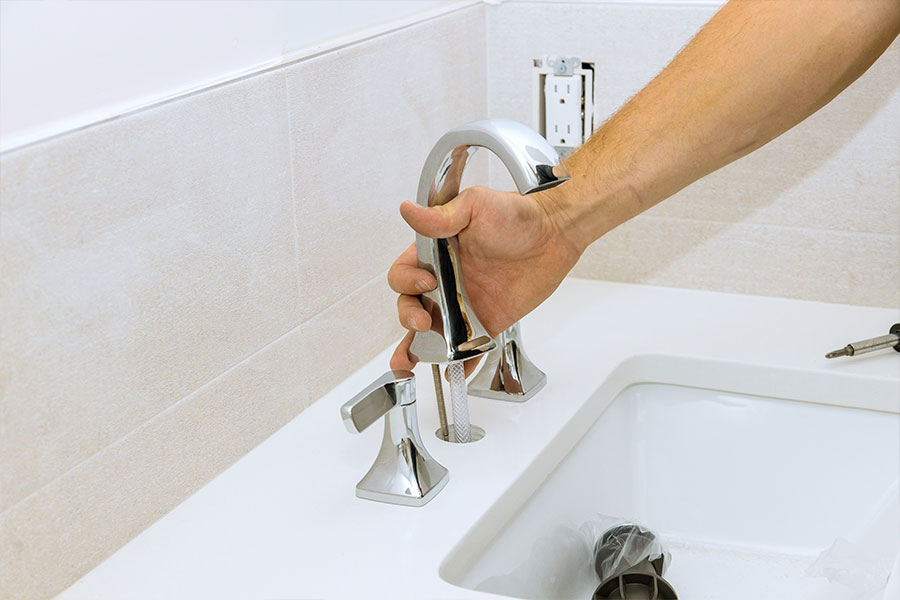
Common faucet problems almost always trace back to one failed part: a worn washer, a cracked O-ring, or a spent cartridge. Tightening the handle harder fixes none of them.
Household leaks add up. EPA WaterSense reports that nine percent of homes have leaks that waste 50 gallons or more per day. Alchemy Plumbing has handled Lake Oswego, OR fixtures for over 25 years, and the drip is almost always the cheapest version of the problem.
Key Points
- Worn washers and O-rings cause most drips, especially in older faucets
- Faucet type matters: compression, cartridge, ball, and ceramic disc each fail differently
- Low pressure usually starts at a clogged aerator, which cleans out in minutes
- Water pooling under the sink points to a loose connection or a failed seal, not the faucet head
- High water pressure strains faucet parts and causes both drips and noise
What Causes Common Faucet Problems?
A dripping faucet signals a failed internal part. Start by identifying the faucet type, whether compression, cartridge, ball, or ceramic disc, because each has different components that wear out.
Worn washers and O-rings are the usual culprits, especially in older faucets. If the drip only happens while the faucet is running, look at a loose handle or a faulty cartridge instead.
Water pressure is the next thing to check, since high pressure strains faucet parts and causes leaks. Mineral build-up is worth inspecting too, because it corrodes components and affects how they seat.
Catching these early avoids the costlier repair later. Our licensed tradespeople handle faucet repair and installation and will tell you whether the fixture is worth repairing or replacing.
How Do You Fix Low Water Pressure at a Faucet?
Start at the aerator. Unscrew it from the faucet tip and clear the debris, because mineral buildup there restricts flow more often than anything else.
If cleaning the aerator does not help, inspect the cartridge or valve. Both wear out and both affect pressure.
Next, check the supply lines. Confirm they are fully open and free of kinks or leaks. Then check the main water valve, which sometimes sits partially closed after other work.
If low pressure persists past those checks, the cause is upstream of the fixture. Our fast plumbing repair services trace it back to the source rather than guessing at the faucet.
How Do You Stop a Leak Under the Sink?
Water pooling under your sink comes from a connection or a seal, not the faucet spout. Address it quickly, because a slow leak in a cabinet grows mold before you see it.
Work through it in order:
- Identify the source: look for loose connections or damaged seals
- Turn off the water supply: shut the valves beneath the sink to stop the flow
- Disassemble the faucet: remove the handle and components for inspection
- Replace worn parts: swap out damaged washers, O-rings, or cartridges
- Reassemble and test: put it back together, restore the water, and watch the joints
If you are unsure what condition the rest of your plumbing is in, routine plumbing maintenance plans catch the next failure before it floods a cabinet.
Why Is Your Faucet Making Noise?
Banging, whistling, or knocking at a faucet points to pressure or a loose part. None of it is cosmetic.
Check the aerator for debris first. A clogged aerator restricts flow and produces noise, and it cleans out in minutes.
Inspect the washers and O-rings next. Worn parts vibrate, and replacing them is usually a straightforward fix.
If the noise continues, look at water pressure. High pressure amplifies these sounds, and a pressure-reducing valve resolves it. Loose or unsecured pipes cause rattling, which tightening or cushioning fixes.
Is It Worth Upgrading an Old Faucet?
A new faucet improves water efficiency alongside appearance, and newer models reduce flow without losing performance.
Five things change when you replace an aging fixture:
- Lower water usage through low-flow designs
- Smoother operation and better temperature control
- Modern designs that suit the rest of the room
- Better appeal to buyers when you sell
- Sustainable materials and efficiency certifications
The savings compound over the life of the fixture. We will help you choose one sized and specified for your existing plumbing rather than whatever is on the shelf.
When Should You Call a Plumber Instead?
Some common faucet problems are genuinely a fifteen-minute job. Others are a symptom of something behind the wall, and the difference is worth knowing before you start taking parts off.
Handle it yourself when the fix is a clogged aerator, a visible worn washer, or a loose handle. These need basic tools and carry little risk.
Call a professional when low pressure affects multiple fixtures, when a leak returns after you replaced the part, when you cannot find where the water is coming from, or when the supply valve will not fully close. Each of those usually points to pressure, corrosion, or a supply line issue rather than the faucet itself.
Working on a corroded shut-off valve is the other case to hand over. An old valve that snaps under a wrench turns a drip into an emergency, and that is the repair nobody plans for.o your needs.
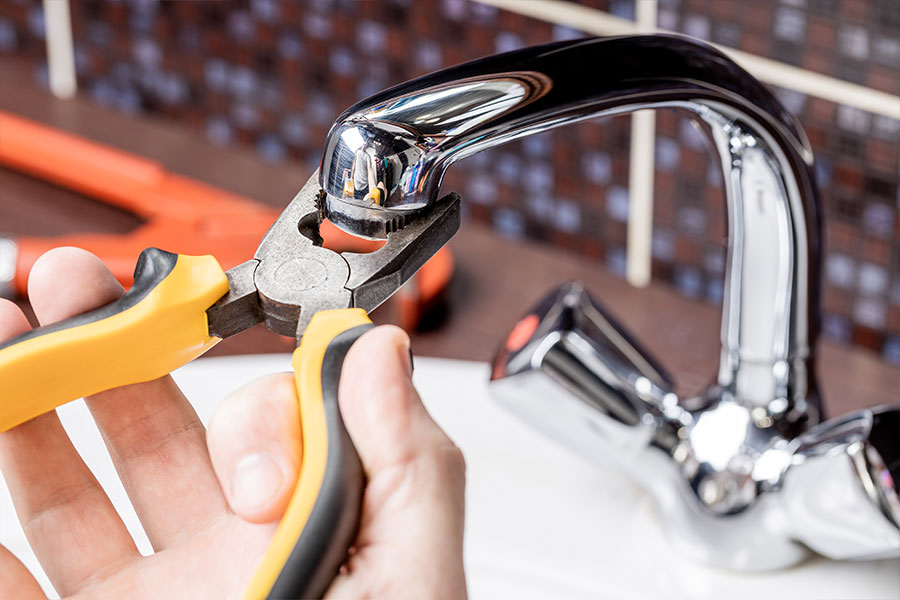
Get Your Lake Oswego Faucet Fixed Properly
Most drips come down to a worn part, and most low-pressure complaints start at the aerator. Work through the checks above and you will solve a good share of them yourself.
For the rest, do not let a small leak run while you decide. Book a consultation and we will diagnose the fixture, quote the repair before we start, and tell you honestly whether replacing it costs less than fixing it.