











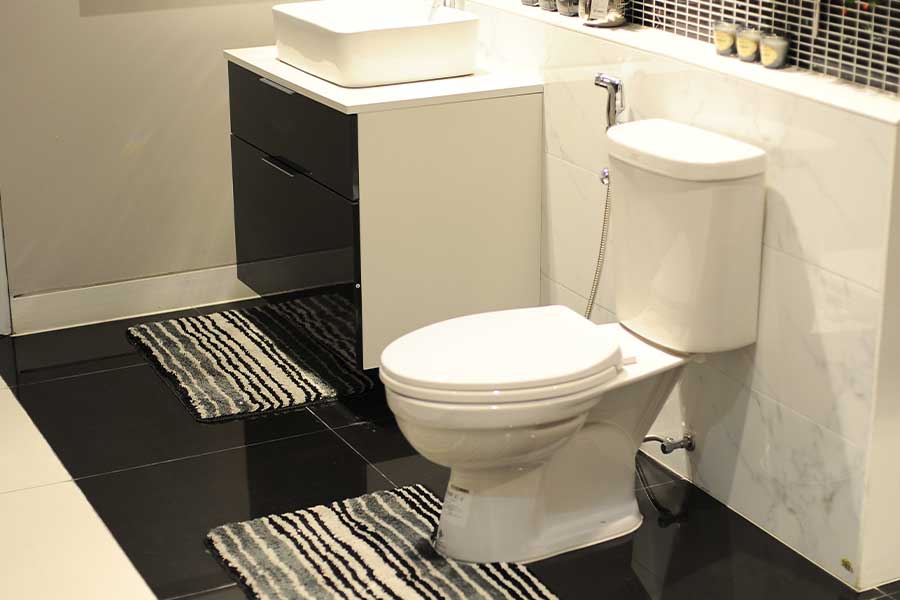
A correct toilet installation comes down to five steps: gather the right parts, prep a clean and level floor, secure the flange, seat the bowl on a fresh wax ring, then test for leaks. Most installs that fail trace back to one of two things, a damaged flange or a wax ring that never fully compressed.
Key Points
- Toilet installation takes five steps, from prepping the floor to testing for leaks.
- Use a new wax ring on every install; a reused ring will not seal.
- The flange must sit level and undamaged, or the bowl leaks no matter how well it is set.
- Hand-tighten the closet bolts in small alternating turns, because overtightening cracks porcelain.
- Run several flushes and check the base and supply line before you call the job finished.
What Tools and Materials Do You Need for a Toilet Installation?
A toilet installation needs a wax ring, new closet bolts and washers, a flexible water supply line, and the toilet itself: tank, bowl, and seat. Those four parts cover the connection points where leaks start.
On the tool side, keep an adjustable wrench, a screwdriver, and a level within reach. A level matters more than people expect, because a bowl that sits even slightly off will rock and break the wax seal over time.
Round out the kit with a sponge, a bucket, and gloves. Buy the wax ring new every time. It is the cheapest part in the job and the one most likely to cause a callback if reused. Toilet repair and installation services cover the whole job when you would rather not source parts yourself.
How Do You Prepare the Floor Before a Toilet Installation?
Preparing the floor means shutting off the water, emptying the old toilet, and confirming the subfloor underneath is solid. A stable, dry, level surface is what the entire installation rests on.
Start by clearing the area of fixtures and supplies. Shut the supply valve, flush to empty the tank and bowl, then sponge out what is left. Lift the old toilet and look at what it was sitting on.
Soft or discolored subfloor around the flange means water has been getting past the old seal, often for a long time. Setting a new toilet on a compromised floor guarantees a repeat of the same problem. Fix the floor first. If the damage runs wider than the footprint of the toilet, professional plumbing repair is the faster path. Lay down towels or a drop cloth before you go further.
Installing the Toilet Flange
The flange is the collar that anchors the toilet to the drain pipe and holds the closet bolts. It has to sit flush with the finished floor and be level, with no cracks in the ring or the bolt slots.
Secure a new flange to the subfloor with screws or anchors rated for the material. If you are reusing an existing flange, scrape off all old wax and debris so you are checking bare metal or plastic.
Inspect the bolt slots closely. A cracked slot will not hold the toilet down, and the bowl will rock no matter how carefully you seat it. Flange repair rings solve most of these cases, but a badly broken flange needs to be replaced before anything sits on it.
Setting the Toilet in Place
Setting the toilet is the step where the seal is made or lost. Press the bowl straight down onto the wax ring in one motion and do not lift it back up to check your work, because lifting breaks the seal and the ring has to be replaced.
Lower the bowl with the base holes aligned over the flange bolts. Press down with steady body weight to compress the wax. A gentle rock settles it fully.
Add the washers and nuts, then tighten in small alternating turns, left, right, left, right. Stop as soon as the bowl stops moving. Porcelain cracks well before the bolts feel tight. If the toilet shifts later, the signs you need professional toilet repair are worth knowing before a slow leak reaches the subfloor.
Testing for Leaks and Final Adjustments
Testing means filling the tank, running several flushes, and checking three specific points: the base of the bowl, the supply line connection, and the tank-to-bowl bolts.
Open the supply valve and let the tank fill completely. Watch the supply connection first, since that one shows immediately. Then run three or four flushes back to back.
Wipe the floor around the base dry and check it again after the last flush. A wax ring leak is slow, so a dry floor right after the first flush is not proof of anything. Snug any weeping connection gently rather than cranking it. EPA WaterSense guidance on toilets covers how much water a modern unit should be using once it is running correctly.
When Should You Call a Plumber Instead?
Some toilet installations stop being a weekend job partway through. Call a plumber when you find any of the following, because each one means the problem is below the toilet rather than in it.
- Soft subfloor: Spongy or discolored wood around the flange means water has been sitting there, and new flooring work comes before a new toilet.
- Broken flange: Cracked bolt slots or a flange sitting below the finished floor height usually needs a repair ring or full replacement to seal properly.
- Closet bend damage: A cracked or misaligned drain elbow under the flange is a drain repair, not an installation step.
- Persistent rocking: A bowl that still moves after correct bolting usually means the floor is not flat, which shims alone will not fix long-term.
- Repeat leaks: A toilet that leaks again after a fresh wax ring points to a flange or drain issue underneath.
Homeowners across Tualatin, OR run into the flange-height problem most often in homes where tile was laid over the original floor without adjusting the flange.
Get a Toilet Installation That Seals the First Time
Five steps, done in order, with a new wax ring and a level floor. That is the whole job when the flange underneath is sound. When it is not, the fix belongs below the toilet, and installing over the problem just delays it.
If you have found soft subfloor, a cracked flange, or a toilet that will not stop rocking, contact our team today and we will assess what is under the fixture before setting anything new on top of it.